

Period: 2020 to 2023
Target Audience: All residents of Mie Prefecture
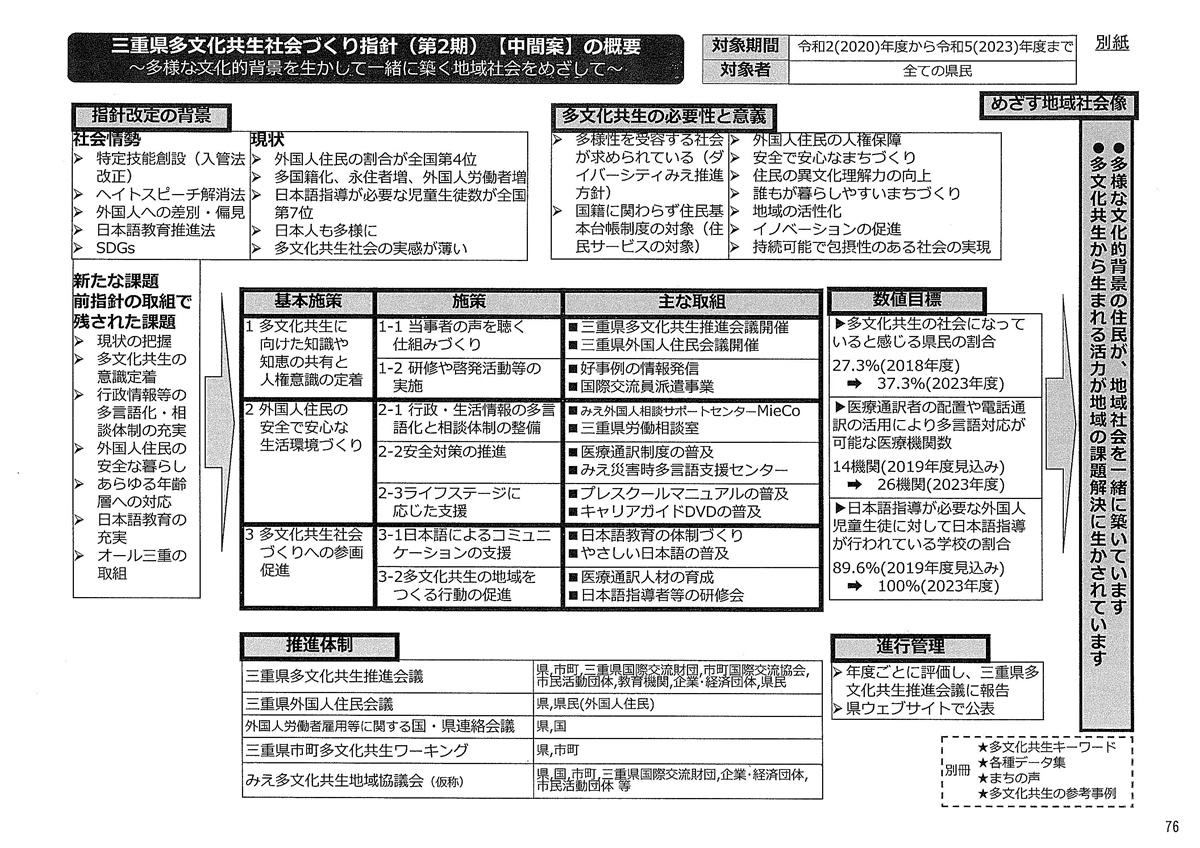
Background to the revisions of the Guidelines
Social Context
- Approval of new “Specified Skilled Worker” (Tokutei Gino) residency visa (Immigration Control and Refugee Recognition Act)
- Hate Speech Act (Laws to promote activities to eliminate illegal discrimination against those with foreign roots)
- Instances of discrimination/segregation of foreigners
- Japanese Language Education Promotion Law
- Sustainable Development Goals (SDGs)
Current Situation in Mie Prefecture
- Foreign residents make up a high ratio of the total population in Mie (4th largest among the 47 prefectures of Japan)
- Diversification of nationalities and increase of permanent residents and foreign workers
- 7th place among the 47 prefectures for the number of children in need of Japanese language education and 1st place for the number of foreign children enrolled in schools who need Japanese language education
- The Japanese identity is changing
- There is a weak sense of multiculturalism
New and Current Tasks
- Understanding the current situation
- Spreading awareness of a multicultural society
- Translating government information and improving consultation services
- Providing support for safe living environment for foreign residents
- Addressing the issues of all age groups
- Improving Japanese language teaching
- All Mie: Ensuring that all residents can participate in multicultural initiatives
The Need for and Significance of Multiculturalism
- A growing need for an inclusive society
- Providing the Basic Resident Registration System (Jumin Kihon Daicho) regardless of nationality
- Guaranteeing human rights for foreign residents
- Building a safe and secure society
- Increasing residents’ multicultural awareness
- Building a society where diversity is respected
- Revitalizing communities
- Promoting innovation
- Building a sustainable and inclusive society where no one is left behind
Basic Measures
- Sharing knowledge and information about multiculturalism and raising awareness for human rights
- Creating a safe environment for foreign residents
- Encouraging participation in building a multicultural society
Detailed Measures
- Creating opportunities to hear the opinions of concerned parties
- Training, education, and activities to raise awareness
- Creating and improving consultation services as well as providing translations of government communications and information about living in Mie
- Promoting security measures
- Providing aid appropriate for each stage of life
- Assisting Japanese language communication
- Promoting activities to build a multicultural community
Participating Committees
- Council for the Promotion of Multicultural Affairs in Mie (Mie-ken Tabunka Kyosei Suishin Kaigi)
- Foreign Residents Meeting of Mie Prefecture (Mie-ken Gaikokujin Jumin Kaigi)
- National and Prefectural Liaison Meetings for the Employability of Foreign Workers and Related Issues (Gaikokujin Rodosha Koyo Nado ni Kansuru Kuni-Ken Renraku Kaigi)
- Municipal Multicultural Working Group of Mie Prefecture (Mieken Shicho Tabunka Kyosei Working)
- Mie Regional Council on Multicultural Affairs (Mie Tabunka Kyosei Chiiki Kyogikai) [Provisional Name]
Progress Management
- Evaluate annual progress and report to the Council for the Promotion of Multicultural Affairs in Mie
- Publish the results on Mie Prefecture’s website
Objectives for 2023
- Percentage of citizens who feel that multiculturalism is increasing in society: 27.3%➡37.3%
- Number of medical institutions assisting in multiple languages through the use of medical interpreters or telephone translation: 14➡26
- Percentage of schools providing Japanese language guidance to foreign students in need of language assistance: 89.6%➡100%
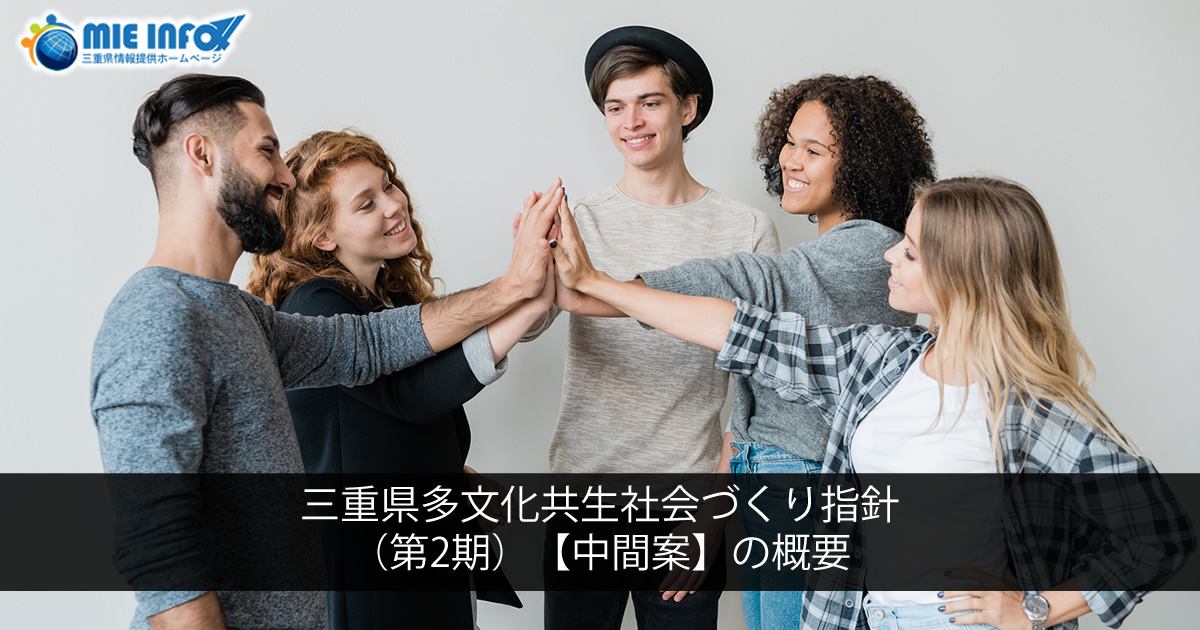
Mie Prefecture’s Vision of a Multicultural Society
- Residents with diverse cultural backgrounds building the community together
- Potential solutions for regional issues are driven by multiculturalism