







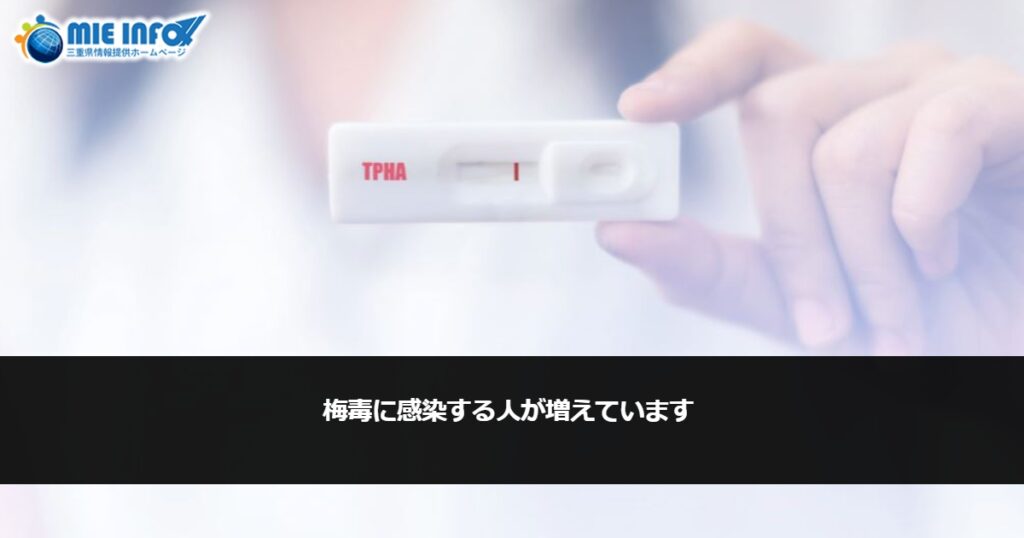
Since 2010, the number of infected cases has continued to increase; in 2023, the number of infected cases in Mie Prefecture was 114.
- Infections are most prevalent among men in their 20s to 50s and women in their 20s.
- If you are infected with syphilis, you may develop small lumps in your genitals or mouth, or a non-painful or itchy rash on your palms or other areas.
It may spread throughout the body. Additionally, even if these symptoms disappear, the virus remains contagious.
- If left untreated, lesions can develop in multiple organs such as the heart, blood vessels, and brain over a period of several years to decades, and can sometimes lead to death.
- Syphilis infection during pregnancy is especially dangerous. When a pregnant woman is infected with syphilis, the infection not only affects the mother but also the fetus through the placenta, which can lead to stillbirth or premature birth, as well as neurological and bone abnormalities in the unborn child. Even if there are no symptoms at birth, symptoms may develop later.
About prevention, testing, and treatment
- Proper use of condoms can reduce the risk of sexually transmitted infections.
- If you have symptoms or are worried, get tested early to protect yourself and your loved one.
- Your partner may also be infected. If you are found to be infected, your partner should also be tested.
- If treated early, syphilis can be cured with injections or oral medications.
Click here if you would like to take a test at a public health center in Mie Prefecture
If you would like to consult in a foreign language, please call Mieco (Mie Foreign Consultation Support Center).
[Telephone number] 080-3300-8077
[Reception hours] Monday to Friday 9:00 to 16:00 (closed on Saturdays, Sundays, holidays, and New Year’s holidays)